Honest sharing
Introduction
Honest sharing, received by the German alternative practitioner Gopal Norbert Klein, is -in my current opinion- the best tool to establish safety in the connection to other members of our species and thereby open up the energetic channels to the source of our true, divine self. This can have all kinds of positive effects, including but not limited to improved physical, emotional and mental health. Until I learned about Gopal's work, I used various methods to successfully help myself and others, but something seemed to be missing. As I discovered honest sharing and looked deeper into it, I realized that it is the missing component that is necessary to truly heal mentally, emotionally and physically and integrate everything into our life in a meaningful way. I say meaningful, because I feel that a life in isolation, without some form of companionship, no matter how advanced one might be spiritually, is truly and utterly meaningless.
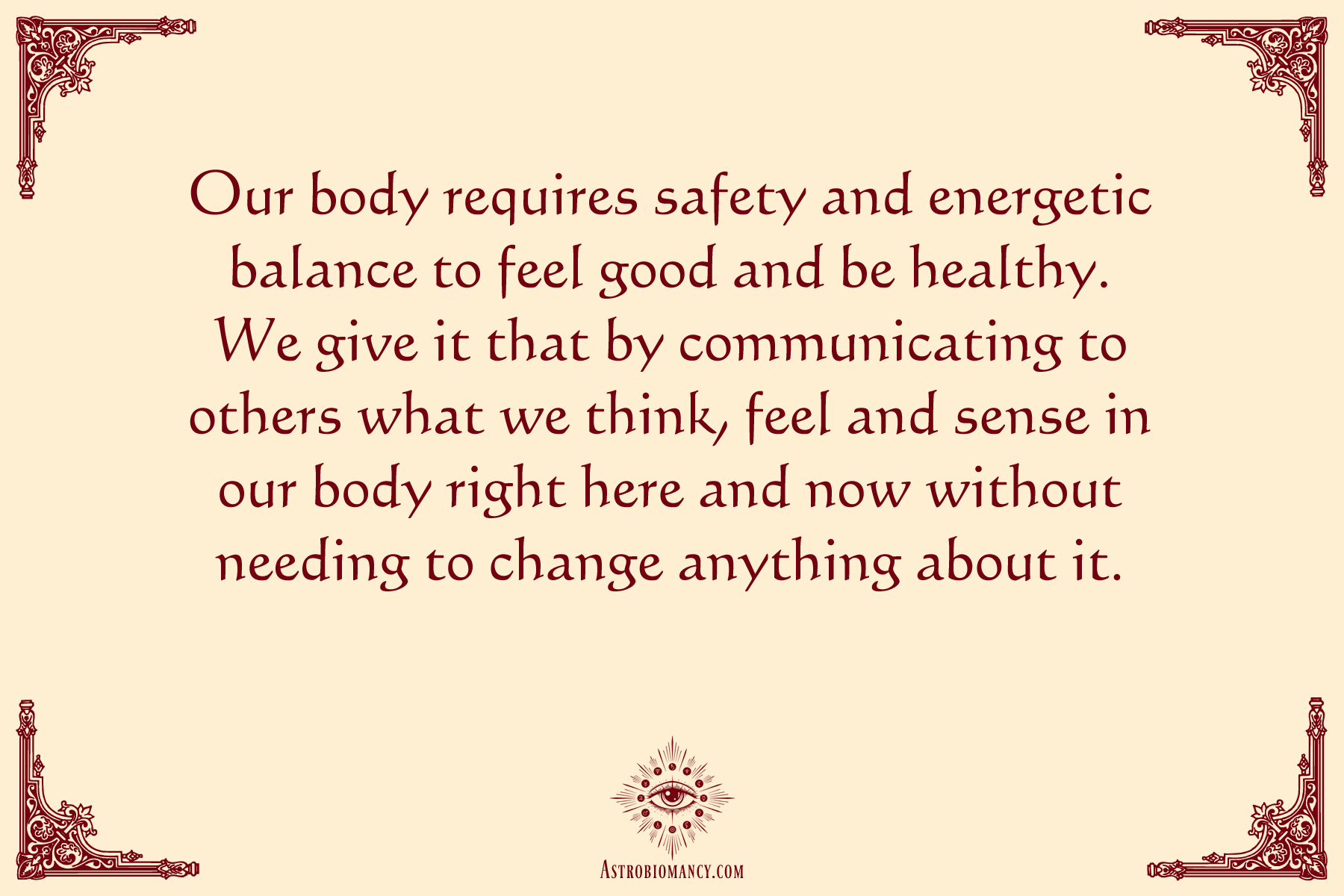
The reason why honest sharing is different than other forms of spiritual development is that when we do it, we don't seek to change what is inside of us right here and now, essentially creating the very thing that we seek to get away from, but instead merely observe it, allowing it to be whatever it is, and communicate it to someone we trust without negative consequences. Suddenly, our body-mind-unit, our separate self inside the matrix, realizes that it can express all of itself to someone else and nothing bad happens. Neither is it attacked (with words or actions), nor left alone, nor ignored, nor manipulated (fight/flight/freeze/fawn-response). We realize that we don't need to hold anything back, effectively closing that part of us off, hiding it out of fear, nor do we have to change anything about ourselves because it could be judged as wrong or not good enough. Whatever is there can be communicated, and this communication opens energy channels that were previously blocked, when there was a belief that expressing this about ourself would surely have negative repercussions. Where before there were fear and insecurity, we now experience a deep sense of freedom and safety like we never did before, accompanied by a rush of vitalizing energy and joy, and that changes literally everything in our life.
Below, I explain my personal view of what honest sharing is and why, despite its apparent simplicity, it may be more powerful than any other healing modality. Anything else we can do is complementary to honest sharing. There appears to be no other permanent way out of physical or emotional pain that is as simple, because there is no other direct way that addresses the ultimate cause of our suffering - separation. Anything else is either treating symptoms, trying to change what feels wrong or not good enough, or attempting to flee from what is here now, and that includes very useful spiritual practices like meditation, mindfulness, positive thinking, breathwork, law of attraction, shadow work, embracing our pain, etc. The fact is, our physical body is what we experience here now, and it is what it is - a fundamental part of our existence as human beings on Earth. In order to heal, we need to relax in complete safety in our body, and that happens only through establishing an honest, open and uncensored connection with at least one other member of our species in order to feel safe. That's all it takes. It may sound simple but is not necessarily easy, or our world wouldn't be as dysfunctional as it is. Honest sharing teaches us exactly how to (re-)establish this connection that most of us lost in this life when we were children, or never had.
What it is and how it works
Let's face it - most of us are dissatisfied with one or more aspects of our lives, and we are unable to create lasting happiness for all kinds of reasons. Let me assure you right at the outset that with honest sharing it is not necessary to look at these reasons, because they will inevitably be mere symbols outside of us for a state that is inside, buried and forgotten in our subconscious.
When we practice honest sharing we are not required to dig up the past, explain why we are unhappy, who wronged us, why we hate certain things or people, what we are afraid of, why we are depressed, and so on. None of that is important. That's one reason why honest sharing does not require years of working on ourselves or psychosomatic digging by health practitioners. On the contrary, it has the potential to facilitate lasting improvement in the very first and each following session.
So what is honest sharing and how and why does it work like magic?
The physical expression of energetic dynamics
To understand that, we first need to get a very basic idea of how our physical bodies work. When we incarnate as human beings, we use mammalian bodies to have an experience of life on Earth. A fundamental aspect of mammals is that we get our sense of safety from contact and interaction with other members of our species. In order to feel good and be healthy it is absolutely mandatory that our bodies feel safe. In very simplified terms, let's just say that safety translates in our body to the ventral part of the vagus nerve being active. In life-threatening situations it shuts down and another part of the nervous system becomes active, which then creates one of four different responses to the threat - fight, flight, or freeze, which are immediate reactions – as well as fawn, which can happen under threatening conditions that last longer and that we cannot escape from. Maybe you have heard about Stockholm syndrome.
A natural sequence of events would be to fight and defeat whatever threatens us, flee from the threat, or "play dead" and survive. In any case, the energy our body mobilized in the face of mortal danger must pass through our system and be released. In fight or flight situations this is what happens in due course, and after a freeze response, what could be called shock trauma, it might be released later through shaking, crying and other mechanisms.
If this happens, if the threat passed and the energy is released, our body then starts to reactivate the ventral vagus and returns to relaxation and a state of safety. If, however, the body does not relax and the energy stays stuck in our system, we remain in a perpetual state of high alert, which over time may be downregulated but is never fully resolved. This is what causes more and more dysfunction and dis-ease on the physical, emotional and mental levels the longer it lasts, and which creates separation from others.
In the case of humans that is, unfortunately, the condition most of us are in right now, and have been since childhood. For a child it is a life-threatening situation if a parent or other caregiver hurts it with words or actions (fight), leaves it alone (flight), ignores it (freeze), or manipulates it for their own ends (fawn). Ultimately, all of these behaviours constitute attacks that threaten survival. It is very likely that one or more of these traumatic situations occurred repeatedly throughout childhood for all of us. Various problems then developed over time since these childhood traumas were never properly resolved, because our parents, themselves traumatized since childhood, didn’t know how. This self-perpetuating cycle has been going on for untold generations, where each new generation of parents inadvertently traumatized their children, without the traumas ever being resolved.
This resolution would happen if the child were able to communicate to a parent or caregiver what’s going on inside of it in any given situation, thereby releasing and rebalancing the energy. It needs to communicate its emotions, its thoughts and any physical sensations it experiences, all in a safe environment to someone the child trusts and who does not judge or attack the child for any of it (judgement is also an attack!). Unfortunately, for almost all of us this never happened to the degree that it should have.
That is what honest sharing is all about. We do that which was impossible when we were children. We communicate what’s going on inside of us at this very moment from the perspective of an observer - what we feel, what we think, and what we sense in our body. The important part is that we do it without being identified with it, because the part that still feels and thinks this way is the child in us that experienced the trauma, and we no longer are that child. We are grown up, and what was a life-threatening situation for us when we were children is no longer a threat at all. If we can communicate it all without being identified with the part of us that experiences the pain and hurt, we discharge the energy and eliminate the need to express it in ways that hurt others.
When we do that, we are the witness to what happens in us, and we communicate in a safe environment, to a person that feels safe to us, such as a spouse or good friend, what the child in us was unable to communicate or even express back then. This rebalances the energy, reestablishes the contact to another human being, and resolves the traumatic situation that we were stuck in. Where before we had closed down, we now open up, and as the blocked energy starts to flow again our body can finally return to a state of relaxation in safety. The ventral vagus gets reactivated and our whole life can begin to change, literally.
(The following is strictly my own perspective, not the general view of Gopal or other practitioners of honest sharing)
The two opposite perspectives/experiences and the movement of energy
Since we live in a dualistic universe, life is experienced from two opposing perspectives - male and female:
The male perspective - often but not necessarily only experienced by men - is the autonomy type. The focus is more on the self, and the movement of energy is primarily inside=>out, meaning this type feels the need to control and influence others and their behaviour in order to get his needs met and feel safe. We could call this the perpetrator.
The female perspective - often but not necessarily only experienced by women - is the merging type. The focus is more on others, and the movement of energy is primarily outside=>in, meaning this type feels the need to allow others to control and influence her and her behaviour in order to get her needs met and feel safe. We could call this the victim.
To understand how and why these perspectives are experienced and expressed we should look back to the beginnings of humanity in a hunter-gatherer/caretaker society.
The autonomy type is the typical hunter-gatherer who can be alone for longer stretches of time without the need for constant companionship. His purpose, on the one hand, is to hunt for and gather food and take it back to his mate, family or tribe, and on the other hand the defence against threats to his own and by extension also their survival.
The merging type is the typical caretaker who is usually surrounded by those she takes care of - children, elderly or sick members of the tribe. Caretaking is her purpose - to ensure that others get all their needs met. To her, failing to do that threatens their survival and by extension also her own.
Their tasks may be unlike each other, but their fears are very similar. Even though the direction of the perceived threat is different, the causative action is always the same - an attack.
The autonomy type is more focused on himself, hence he is afraid of being hurt (in word or deed), which to him equals his death, and therefore tends to avoid close interactions with others. Even though he may appear to be, he is not really there. He does not connect. Instead, he protects himself.
The merging type is more focused on others, hence she is afraid of hurting them, which to her equals their death and being alone, and therefore tends to avoid doing what could lead to her losing them. Even though she is there, she is not really herself. She does not connect. Instead, she is controlling how she appears to others to ensure they don't leave her.
Considering this, we find that our ultimate fear is the fear of losing that which we are primarily focused on as the result of an attack. To the autonomy type it is the self, and to the merging type it is others.
Here we must understand that to our subconscious mind, which equals all there is, there are no others, only I. Once we realize that, it becomes clear that to our subconscious, the very driver of our existence, losing ourself and losing others is the same - the death of I - nonexistence - and attacking others is the same as attacking ourself. So what we really fear is death and nonexistence by attacking ourself.
Let me say that again: To our subconscious mind any attack is an attack against ourself!
An attack creates an energetic imbalance that must be rebalanced to ensure our continued existence. We could call this Karma. How is it rebalanced? Most often it happens by expressing it in the form of a counter-attack, either with words or actions. This can lead back to balance or, more often than not, create another imbalance. That way, it becomes a self-perpetuating cycle in which energetic imbalances are never fully resolved, may even be stacked upon each other, and instead transmitted from parents to their children. Thus, the world we live in today is the result of decades, centuries or perhaps millennia of energetic imbalances and unresolved karmic debt.
Since we keep attacking others or ourselves in some way, shape or form we keep being attacked, because in reality we are all one. Being attacked engenders fear of being hurt, so the reason we are hurting is because we keep attacking, and the reason we keep attacking is because we are hurting. What came first, the chicken or the egg? The answer is: "Both were there at the same time". One requires the other to exist. Eliminating one automatically eliminates the other. We stop hurting as soon as we stop attacking. We reconnect as soon as we stop separating. This is what we must understand. While we are in a human body, we experience separation from everything else in creation because we are afraid of being hurt and keep attacking. This fear, even though it is an illusion because separation is an illusion, feels nevertheless very real while it is being experienced, and it only truly disappears when separation disappears and vice versa. Until then, one automatically induces the other.
Not understanding this dynamic, we do everything we can in order to not experience this fear, thereby inadvertently keeping it alive.
The autonomy type isolates and thereby inadventently hurts himself, believing that staying alone and not needing anyone is more bearable than being hurt by others. Subconsciously, loneliness to him is more bearable than the loss of self his mind imagines would inevitably happen if he were hurt by others. As a result, he carries a deep sadness and loneliness in his heart that is felt whenever it gets too intense and, in order to heal, must be communicated to others through honest sharing.
The merging type devotes herself to the care of others and fulfilling (what she believes are) their needs over her own in order to ensure that she does not hurt them in any perceived way so as to not lose them, thereby disregarding and inadvertently hurting herself. Subconsciously, self-hate over not allowing herself to put her own needs over those of others is more bearable than the loss of others her mind imagines would inevitably happen if she hurt them. As a result, she carries a burning anger and hate in her guts that is felt whenever it gets too intense and, in order to heal, must be communicated to others through honest sharing.
Communicating this sadness/loneliness or anger/hate and the thoughts that led to them rebalances the energy in a safe manner and eliminates the need to express them in harmful ways through actually hurting others and being hurt by them. This is how honest sharing heals ourselves and our relationships - we stop all attacks in word and deed and instead communicate what we think, feel and sense in our body from the perspective of an observer.
If we look at the energy dynamics we realize that the energy that is held back through our fear of hurting or being hurt is the very energy that opposes and balances the original direction.
To the autonomy type, whose energetic movement is inside=>out, the energy that balances it moves outside=>in and creates the experience of sadness, loneliness and depression. It is because he feels the need to control or suppress the behaviour of others in order to feel safe that the autonomy type feels sadness and loneliness. Thus, for him, communicating what he thinks, feels and senses in his body rather than trying to control the behaviour of others stops the energy from moving inside=>out, and this eliminates the energetic outside=>in countermovement that creates the experience of sadness and loneliness. He must realize that his trying to control others is effectively an attack on them, and this will inevitably lead to being attacked/hurt himself.
To the merging type, whose energetic movement is outside=>in, the energy that balances it moves inside=>out and creates the experience of anger, hate and mania. It is because she feels the need to control or suppress her own behaviour in relationship to others in order to feel safe that the merging type feels anger and hate. Thus, for her, communicating what she thinks, feels and senses in her body rather than trying to control her own behaviour stops the energy from moving outside=>in, and this eliminates the energetic inside=>out countermovement that creates the experience of anger and hate. She must realize that her trying to control her own behaviour is effectively an attack on herself, and this will inevitably lead to her attacking/hurting others.
The more energy is channelled into controlling (attacking) either others or ourself, the more severe the symptoms that appear as disease in the physical body and/or mind will be. Therefore, it is better to communicate what we think, feel and sense in our body in the form of honest sharing because that does not constitute attacks against ourself or others, does not create an energetic imbalance which must be corrected, and completely eliminates the energetic need for retaliation.
Last but not least, we should understand that we are not either autonomy type or merging type but both, to varying degrees. Depending on how balanced the masculine and feminine energies inside us are, the more or less we express both behaviours and qualities. At times, an autonomy type can be afraid of hurting others almost as much as of being hurt himself, and feel/express anger and hate almost as much as sadness and loneliness. A merging type can sometimes be afraid of being hurt almost as much as of hurting others, and feel/express sadness and loneliness almost as much as anger and hate. Only extreme expressions of one type or the other are so obvious that they are of special note, such as the narcissistic personality disorder of an autonomy type, or the helper syndrome of a merging type. Given the energetic imbalance, it is not unusual that such types attract each other, often with catastrophic consequences. In order to heal, we must endeavour to come closer to a balanced state. The autonomy type heals by focusing a bit more on the needs of others and not only on his own (38-45% other vs. 55-62% own), and the merging type heals by focusing a bit more on her own needs and not only on those of others (38-45% own vs. 55-62% other). This leads to balanced energy dynamics in relationships between autonomy and merging types and, in combination with honest sharing, allows both partners to heal and (re-)connect.
What I offer as a practitioner of honest sharing is a safe environment and myself as the partner who listens to what must be told and heard in order to correct energetic imbalances, as well as the experience of how to communicate without being identified with the traumatized part, and without being judged or attacked for whatever is communicated.
All information given in this blog is Copyright © 2026 by Astrobiomancy Ltd. All rights reserved. No part of this blog article may be reproduced by any means – other than for “fair use” as brief quotations embodied in articles, social media posts or the like – without prior written permission of the author.